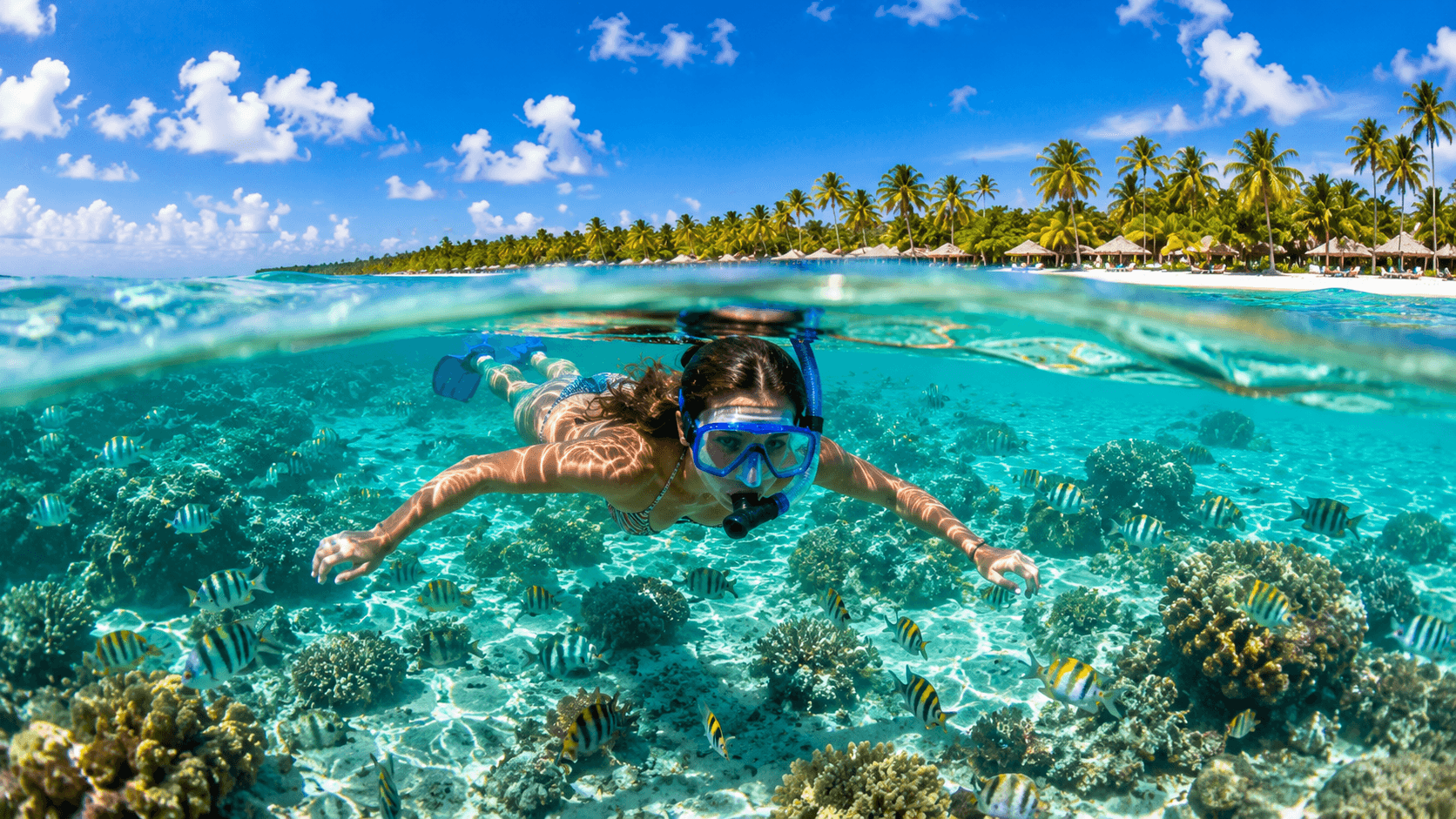
The warm, crystal-clear waters of Punta Cana hide a vibrant underwater world that rivals many of the Caribbean's top snorkeling destinations. Colorful coral gardens, tropical fish in every shade of the rainbow, graceful sea turtles, and gentle nurse sharks are all within easy reach of the shoreline. Whether you are a complete beginner or an experienced snorkeler, Punta Cana offers accessible and rewarding spots that will leave you speechless.
Bavaro Reef
The Bavaro Reef is the most accessible snorkeling spot in Punta Cana and the one most visitors experience first. This barrier reef runs parallel to Bavaro Beach and sits just a few hundred meters offshore, making it reachable by a short boat ride or even by swimming from certain points along the coast. The reef is home to an impressive variety of marine life including blue tang, sergeant majors, parrotfish, yellowtail snapper, and the occasional barracuda. Brain coral, sea fans, and elkhorn coral formations create an underwater landscape that is endlessly fascinating to explore. Because the reef provides a natural breakwater, the waters between the reef and shore are calm and shallow, making this an excellent spot for beginners and families with children. Most organized snorkeling tours from Bavaro Beach include a stop at this reef, and the experience typically lasts about 45 minutes to an hour in the water.
Catalina Island
For serious snorkelers seeking the best underwater visibility and marine diversity, Catalina Island (Isla Catalina) is the gold standard. Located about 90 minutes by boat from La Romana (accessible as a day trip from Punta Cana), this small uninhabited island is surrounded by pristine reefs that consistently offer visibility exceeding 30 meters. The snorkeling here is exceptional -- expect to see large schools of tropical fish, moray eels, stingrays, spotted eagle rays, sea turtles, and an extraordinary variety of hard and soft corals. The area known as "The Wall" is particularly famous, where the reef drops off steeply into deep blue water, creating a dramatic backdrop for snorkeling along the edge. Day trips to Catalina Island typically include boat transportation, equipment, a guided reef tour, beach time on the island's white sand shore, a buffet lunch, and open bar. It is a full-day commitment but worth every moment for the quality of the underwater experience.
Cotubanama National Park (Saona Reef Area)
The waters around Cotubanama National Park (formerly Parque Nacional del Este), which encompasses Saona Island, offer another outstanding snorkeling environment. While Saona Island tours are primarily known for their beautiful beaches and natural swimming pools, the reef systems in this protected area are among the healthiest in the Dominican Republic. The national park designation means fishing and development are restricted, which has allowed the marine ecosystem to thrive. Snorkelers here often encounter sea stars, conch, juvenile reef sharks, spotted drums, and an abundance of juvenile fish sheltering among the coral heads. The famous natural pool near Saona, where starfish gather on the sandy bottom in waist-deep water, is technically more wading than snorkeling, but it remains one of the most unique marine encounters available in Punta Cana and a must-visit for anyone who loves the ocean.
Marine Life You Will Encounter
Punta Cana's waters are home to a remarkable diversity of marine species. The most commonly spotted fish include parrotfish in brilliant blues and greens, butterflyfish with their distinctive markings, trumpetfish hovering vertically among sea fans, and schools of blue chromis shimmering like underwater clouds. Larger species include green and hawksbill sea turtles, southern stingrays resting on sandy patches, spotted eagle rays gliding effortlessly through the water, and nurse sharks dozing under coral ledges. On the reef itself, you will find brain coral, staghorn coral, sea fans, tube sponges, and fire coral (which you should avoid touching). Invertebrates like spiny lobsters, sea urchins, hermit crabs, and flamingo tongue snails add texture and color to every dive. The best encounters often come when you slow down, hover quietly over a section of reef, and simply watch -- the longer you stay still, the more the underwater world reveals itself.
Equipment and What to Bring
Most organized snorkeling tours in Punta Cana provide all necessary equipment including masks, snorkels, fins, and life jackets. However, if you are particular about fit or plan to snorkel multiple times during your trip, bringing your own mask and snorkel is highly recommended. A well-fitting mask that does not leak makes an enormous difference in your enjoyment. Fins are less critical to bring since most tour-provided fins are adequate for casual snorkeling. Beyond the basics, consider packing a rash guard or swim shirt for sun protection (you will be face-down in the sun for extended periods), reef-safe sunscreen that does not contain oxybenzone or octinoxate (these chemicals damage coral), a waterproof phone case or underwater camera for capturing the experience, and anti-fog solution or a simple trick like rubbing baby shampoo on the inside of your mask lens before entering the water.
Guided Tours vs DIY Snorkeling
One of the most common questions visitors ask is whether they should book a guided snorkeling tour or explore independently. Both approaches have merit, but for most visitors we recommend a guided tour, especially for your first time. Guided tours take you to the best reef locations that would be difficult or impossible to reach on your own, provide professional equipment, include safety briefings and in-water guides who can point out marine life you might otherwise miss, and handle all logistics including transportation and refreshments. Independent snorkeling from the beach is possible in certain areas, particularly along Bavaro Beach where sections of reef are close to shore, but the marine life is generally less abundant and the experience less structured. If you are an experienced snorkeler who wants flexibility, consider hiring a local boat captain for a half day -- this gives you the benefits of reaching better reef sites while maintaining the freedom to explore at your own pace.
Safety Tips for Snorkeling
Snorkeling in Punta Cana is generally very safe, but following basic safety guidelines ensures a worry-free experience. Always snorkel with a buddy or within sight of a group. Wear a life jacket if you are not a confident swimmer -- there is no shame in it, and it allows you to relax and enjoy the marine life without worrying about staying afloat. Never touch, stand on, or take anything from the reef -- coral is alive and fragile, and even a gentle touch can cause damage that takes decades to recover. Be aware of currents, especially outside protected reef areas, and always follow your guide's instructions about where it is safe to swim. Apply sunscreen at least 30 minutes before entering the water so it has time to absorb, and reapply after extended time in the ocean. Stay hydrated between snorkeling sessions, as it is easy to forget about water intake when you are surrounded by the stuff. Finally, if you see something unfamiliar, observe from a distance rather than approaching -- most marine creatures are harmless, but it is best to respect their space.
- Morning Is Best -- Water visibility is typically highest in the morning before wind picks up. Book early departures for the clearest views.
- Use Reef-Safe Sunscreen -- Regular sunscreen chemicals kill coral. Choose a mineral-based, reef-safe formula to protect the reefs you are enjoying.
- Breathe Slowly -- Relaxed, slow breathing through the snorkel conserves energy, reduces fogging, and helps you spot more marine life.
- Look Under Ledges -- Some of the most interesting creatures -- lobsters, moray eels, nurse sharks -- hide under coral overhangs. Peek carefully without touching.
Snorkeling is one of the most accessible and rewarding activities available in Punta Cana. Whether you are floating over the colorful Bavaro Reef just offshore, exploring the pristine waters of Catalina Island, or wading with starfish in the shallows near Saona, every underwater moment connects you with the incredible marine biodiversity of the Caribbean. It costs relatively little, requires no special skills, and creates memories that last a lifetime.